

The Estate Gift Donor Cycle
Here’s the thing - gifts-in-wills fundraising is just different.
The traditional “donor cycle” doesn’t fit.
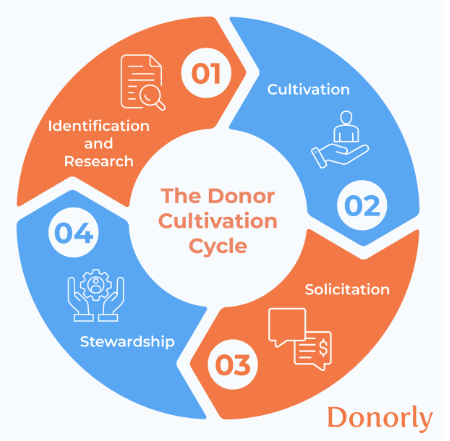
All the cycles in fundraising textbooks focus on a continuous process of asking and stewarding, always keeping “the next gift” in mind.
But a donor can only make one estate gift.
Then you’re stewarding them for life.
When I attended the CAGP (Canadian Association of Gift Planners) conference this past April, Dr. Russel James talked about an alarming trend:
Many donors take charities out of their Will - or replace them with different ones - in their 70s or 80s, which is their final Will.
This happens because Planned Giving donors are taken off communication lists when they stop donating - something that’s common in the last years of life. Even when charities know about the gift-in-Will, they're not adjusting their stewardship strategies to ensure these donors remain connected to the cause.
Yet there’s no framework to guide fundraisers differently.
We’re stuck in the same-old annual funding cycles.
In other words - traditional donor cycles are failing Planned Giving programs.
In Planned Giving, stewardship cannot revolve around the gift that was made last year.
And I’ve previously written on the trap of applying a major gifts mindset to Planned Giving. If you focus on the gift received at death, you’ll limit your ability to form relationships that lead to transformational bequests.
(The traditional cycle I’m talking about is pictured below, borrowed from Donorly:)
But if the traditional donor cycle doesn’t fit - what does?
I’ve scoured fundraising textbooks and online resources, and haven’t found anything.
So, I created one!
Behold, the new Estate Gift Donor Cycle:
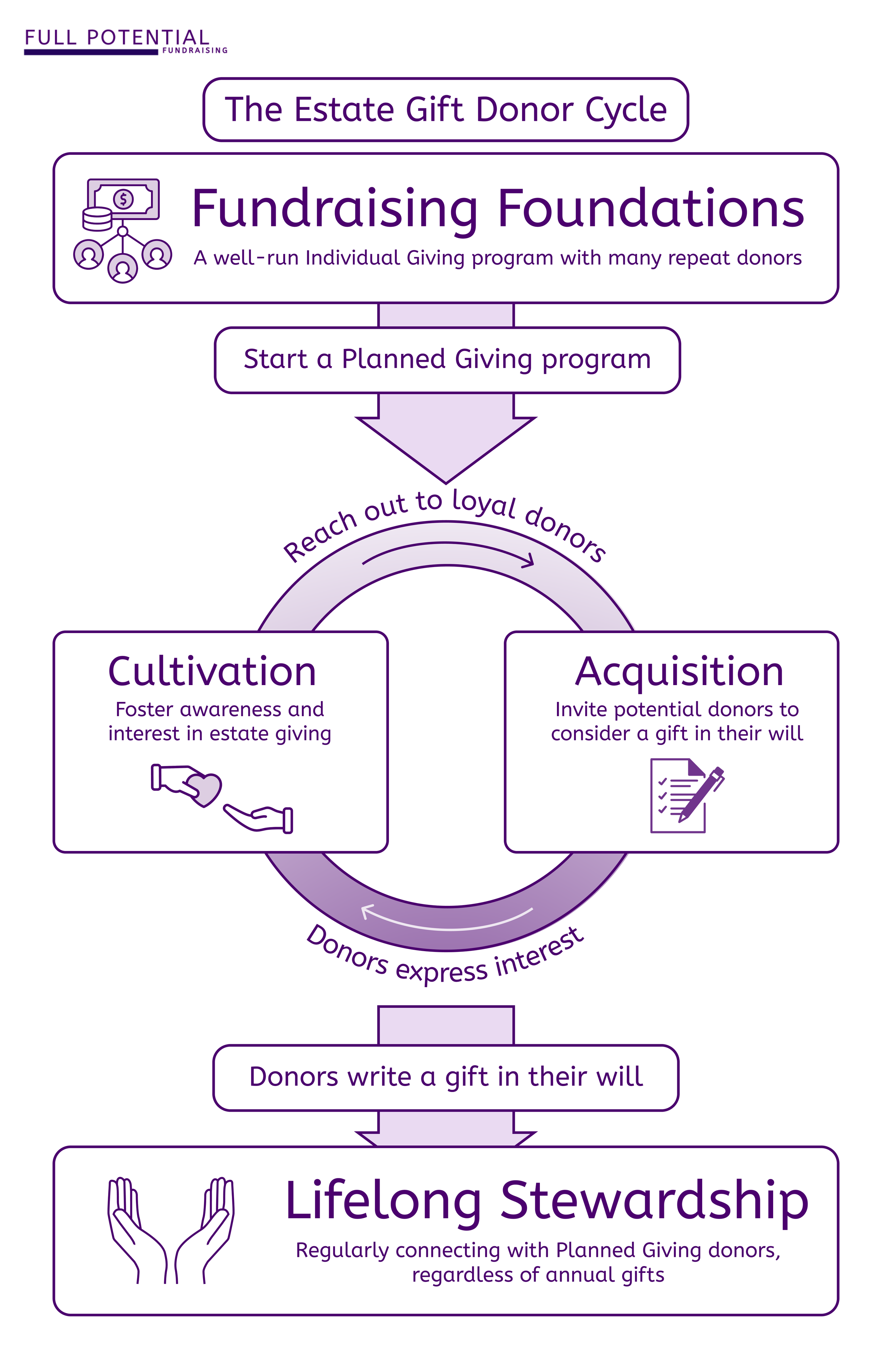
Here’s the breakdown:
Fundraising foundations.
Planned Giving relies on a solid fundraising program. You must regularly communicate with your supporters and have loyal donors before you start.Cultivation.
This is often missed in Planned Giving programs because fundraisers rush to get gift commitments. But you need to share Planned Giving messages to inspire your audience before you make the ask.Acquisition
THIS is when you can finally pop the question “have you considered leaving a gift in your Will to our charity?” And it includes everything from surveys, to Will writing campaigns, to one-on-one conversations.Lifelong Stewardship
This means having a system to regularly connect with Planned Giving donors, regardless of their annual giving. Arguably, this is the most important part of any Planned Giving program.
Over the next 4 Thursdays, I’ll share a detailed break down of each part of the estate giving donor cycle in my newsletter. Sign up below to ensure you don’t miss it!
© Copyright Full Potential Fundraising Inc. All rights reserved.